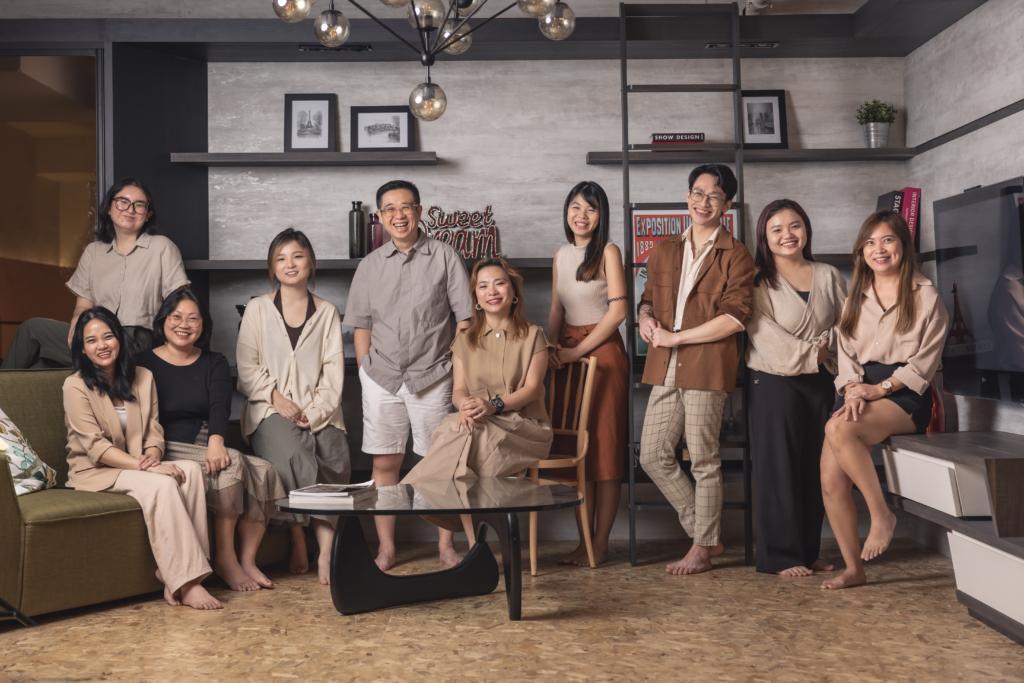
A bungalow gives you space that most Singapore homeowners never get. The question is what to do with it and how to design it in a way that every part is used, not just the parts that photograph easily.
Owning a bungalow in Singapore puts you in a great space. The land title is yours. The garden is yours. There’s no shared lobby, no MCST, no neighbour directly above you. You get the full package and with it, a renovation project that’s fundamentally different from anything you’d face in an HDB flat or condo.
More space doesn’t make design easier. In fact, in some ways, it makes it harder. A bungalow has to work across multiple zones — ground floor living, upper floor bedrooms, basement entertainment, outdoor garden, maybe a pool. This guide covers what actually makes bungalow house design work in Singapore.
What Makes Bungalow Design Different in Singapore
Singapore bungalows come in a few categories worth understanding before you start designing.
Standard bungalows sit on a minimum plot of 400 sqm.
Good Class Bungalows — the most prestigious residential category in Singapore, require a minimum plot of 1,400 sqm and are restricted to designated Good Class Bungalow Areas.
Regardless of which category you’re in, bungalow interior design in Singapore shares some consistent challenges. The plots are larger, but Singapore’s climate doesn’t care. The humidity, heat, and tropical downpours affect a bungalow just as aggressively as a flat.
Outdoor spaces need materials and design choices that survive year-round tropical conditions. While indoor spaces need cross-ventilation strategies that work, not just windows placed for aesthetics.
Getting the zoning right across floors is as important as the design of any individual room.
The Best Bungalow House Design Styles for Singapore
Modern Bungalow House Design
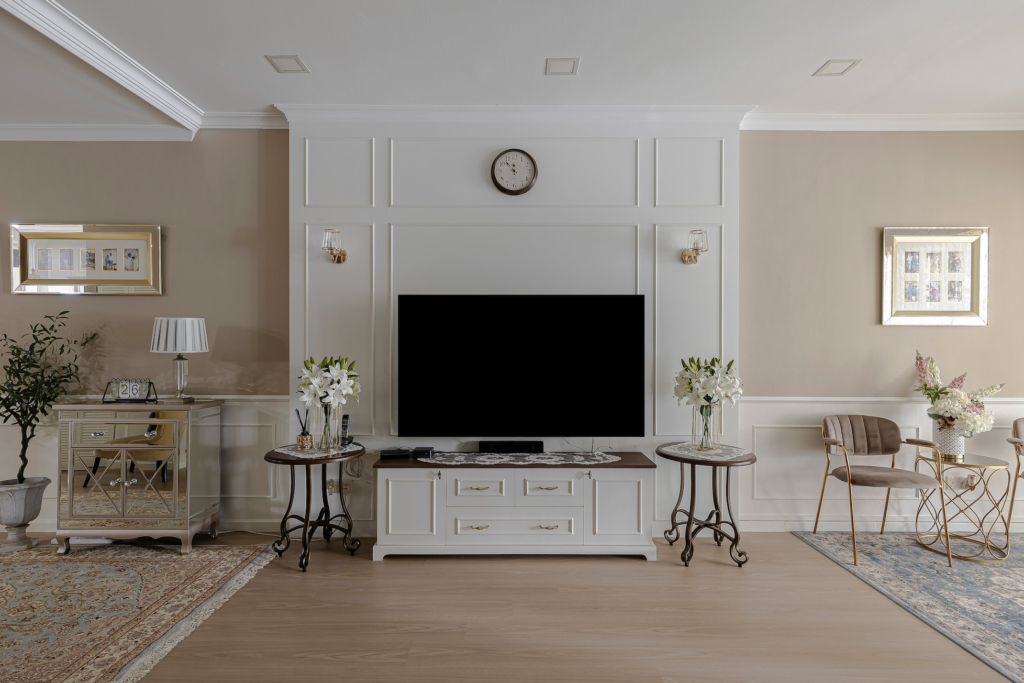
The most requested style in Singapore bungalow renovations right now. Modern bungalow house design combines clean architectural lines, large glazing, and a restrained material palette — concrete, stone, timber, glass. Here are a few design choices that you can go for:
- Double-volume living rooms.
- Full-height sliding glass walls that open the interior to the garden.
- Swimming pools are integrated into the ground-floor level so the indoor and outdoor spaces read as one continuous surface.
What makes modern design work specifically in Singapore’s climate is the emphasis on controlled light. Large openings let light in but also let heat in. The best modern bungalow house designs in Singapore use deep overhangs, louvred screens, and strategic tree placement to shade the glazing without blocking the view.
Modern Tropical Bungalow Design
Singapore sits just north of the equator. The architecture that was developed here across a century of tropical building — generous overhangs, raised floors, cross-ventilation through the house section, indoor-outdoor connection at every level- exists for good reasons.
Modern tropical bungalow design takes those principles and applies them with contemporary materials and aesthetics.
Natural materials throughout: timber cladding, stone floors, rattan furniture, and planted walls. Large openings that can be fully opened in the evening when temperatures drop and closed against afternoon rain. Courtyards that draw light and air through the centre of the house.
A garden that’s designed as an extension of the living space rather than a separate zone you visit occasionally.
This is the best design for bungalow living in Singapore for homeowners who want to actually engage with the climate rather than just air-condition against it.
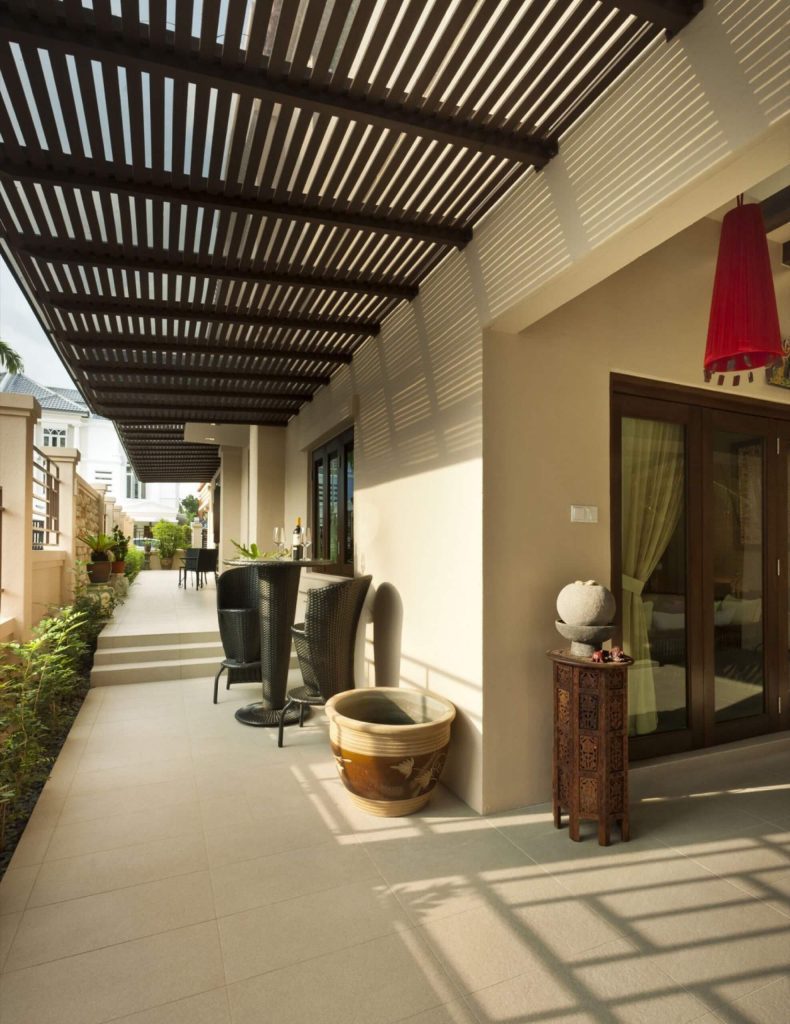
Resort Living @ Park Villas Rise
Simple Bungalow House Design
Not every bungalow renovation needs to be architecturally dramatic. Some of the best-lived-in bungalows in Singapore are the ones that made clear, simple decisions and executed them consistently — a neutral palette throughout, good quality flooring running consistently across all ground floor spaces, built-in joinery that provides storage without cluttering every wall, and a garden that’s low maintenance but always looks considered.
Design details like a bold feature ceiling, an unusual material combination, and a very specific colour palette can feel good at the start. But feel dated within five years. A simpler foundation with personality expressed through furniture, lighting, and soft furnishings gives you the ability to update the feel of the house without structural work.
Small Bungalow House Design
A smaller bungalow plot — around 400 to 600 sqm — needs the same design thinking as any compact home: every decision has to be deliberate. In a small bungalow house design, the temptation to chase every amenity (gym, home theatre, wine room, wet and dry kitchen, guest suite) usually results in a house where nothing has enough space to breathe.
The smarter approach is deciding which two or three things matter most to how you actually live — entertaining, a serious home office, space for the children to have their own territory — and designing those spaces generously, then treating the rest as supporting infrastructure. A small bungalow house design with floor plan thinking built into the brief from the start produces better outcomes than one that tries to fit everything in during the carpentry phase.
Bungalow Interior Design Zone by Zone
Ground Floor: Where the Whole House is Judged
The ground floor of a Singapore bungalow typically holds the living and dining areas, the kitchen, and often a guest room or helper’s room. It’s also the floor that connects to the garden and pool — the indoor-outdoor relationship that defines how good the bungalow feels to live in.
Open-plan ground floors work exceptionally well in bungalows because you have the space to do it properly. A kitchen that fully connects to a dining area and then to a living room, with sliding glass panels at the rear that open the whole floor to the garden — that layout makes a bungalow feel genuinely different from any apartment. Consistent stone or large-format tile flooring that runs from interior to exterior without a threshold reinforces the connection.
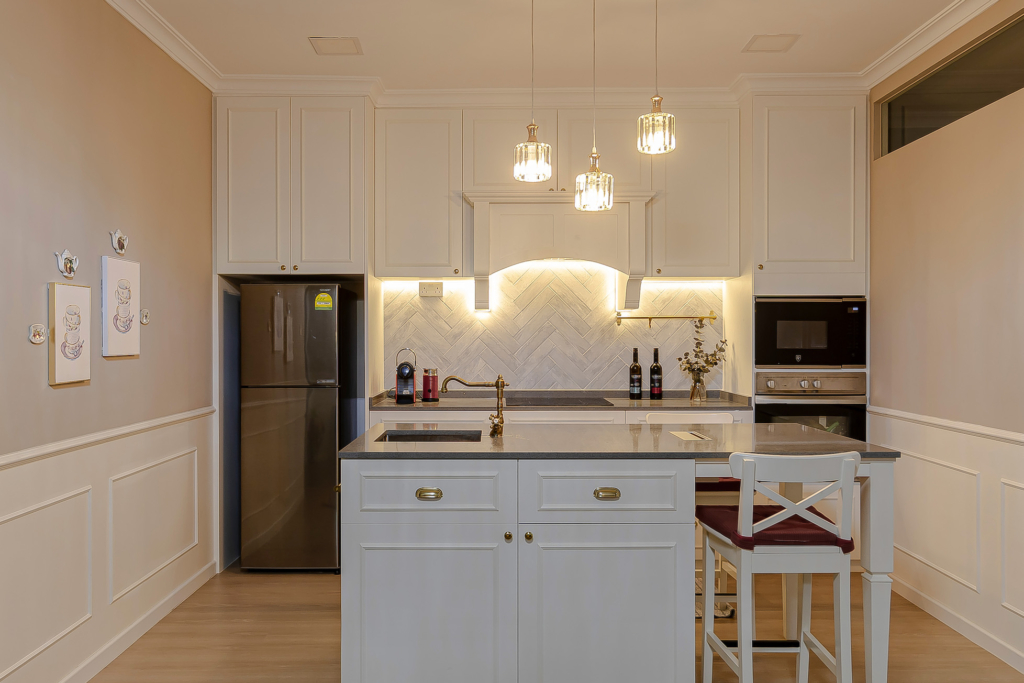
The wet and dry kitchen split is worth getting right. Singapore families cook seriously. An open dry kitchen for daily quick meals and a closed or semi-closed wet kitchen for heavy cooking behind it — this layout keeps the dining and living areas presentable when guests arrive without sacrificing the practical kitchen space your household actually needs.
Upper Floors: Privacy, Bedrooms, and the Master Suite
Upper-floor bungalow interior design should be genuinely private. The master suite on an upper floor is one of the great advantages of a bungalow over an apartment — you can have a proper walk-in wardrobe, an ensuite bathroom with a standalone bath, and a private balcony, all without compromises driven by shared walls or slab restrictions.
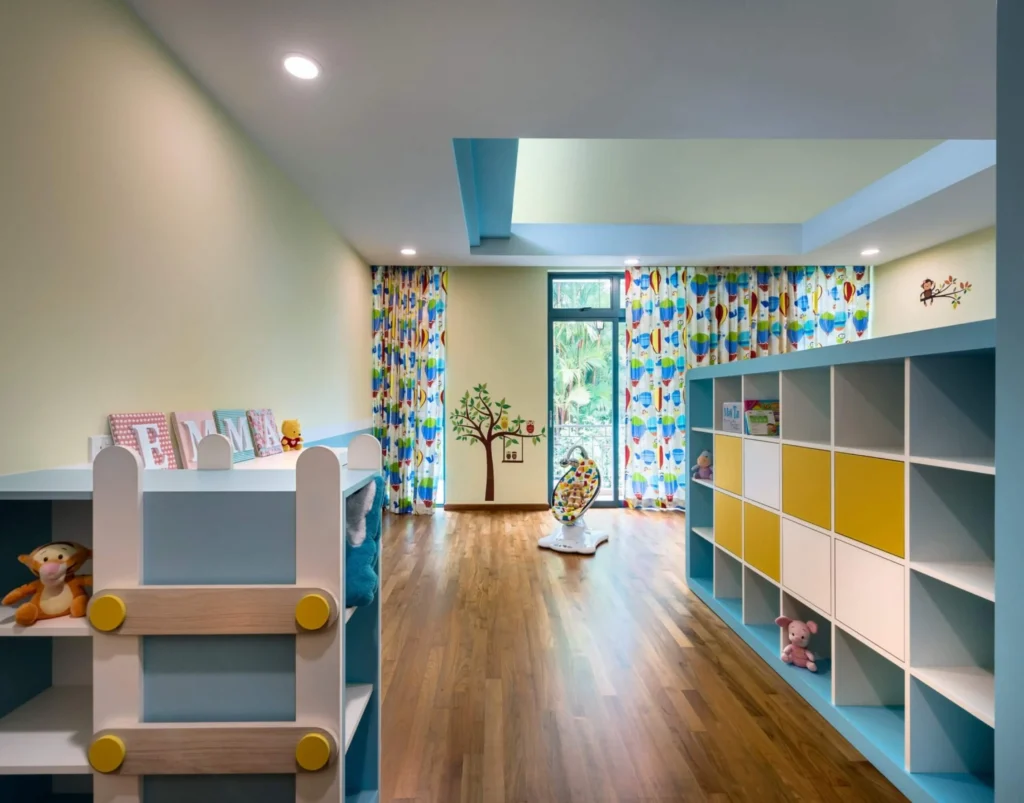
Children’s bedrooms on upper floors benefit from being designed for the long term. A 5-year-old needs different things from a bedroom than a 15-year-old. Building in floor-to-ceiling joinery from the start — with a desk zone, adequate storage, and room to rearrange furniture as they grow — saves significantly on future renovation costs. Bedrooms with their own ensuite bathrooms add genuine value at resale and reduce daily household friction.
Basement and Attic: The Spaces Most Bungalow Owners Get Wrong
Basements in Singapore bungalows are among the most expensive spaces to build and among the most frequently misused. A basement that becomes a dumping ground for things the rest of the house can’t accommodate is an S$80,000 storage unit. Design it with intention before the walls go up: a home cinema, a serious gym, a wine cellar and tasting room, a teenage retreat with its own entrance — one clear purpose executed well.
Waterproofing is non-negotiable in Singapore’s water table. Any basement design needs a waterproofing engineer involved from the early stages, not bolted on at the end. Mechanical ventilation is equally important — a basement without proper airflow becomes humid and unpleasant quickly in Singapore’s climate, regardless of how well it’s designed above the waterproofing.
Outdoor and Garden Design for Singapore Bungalows
The garden of a Singapore bungalow is not a bonus. It’s a core part of the home’s livability. In a country where private outdoor space is genuinely rare, the garden of a bungalow deserves the same design budget and thought as any interior room.
Pool design integrates best when it’s considered from the start of the project, not added as an afterthought. The pool’s orientation relative to the sun and the living areas, the material of the pool surround, the depth and shape — all of these interact with the interior design of the ground floor in ways that are very difficult to adjust once construction begins.
Planting in Singapore needs to account for maintenance reality. A garden full of high-maintenance ornamental plants that requires weekly professional attention is a garden most families stop using properly within two years. Hardy tropical plants — heliconias, gingers, frangipanis, palms — look genuinely beautiful, handle Singapore’s rainfall, and require far less intervention. Landscape design that combines these with well-placed hardscaping (stone paths, timber decking, a covered outdoor dining area) gives you a garden you actually use daily.
Bungalow Renovation Costs in Singapore
Bungalow renovation budgets in Singapore vary more than any other property type, because the scope varies more.
Interior renovation only, standard bungalow: S$300,000 – S$600,000
Full renovation including structural changes: S$500,000 – S$900,000
Comprehensive rebuild or major A&A with pool and landscaping: S$800,000 – S$2,000,000+
Good Class Bungalow full renovation: S$1,500,000 – S$5,000,000+
Key cost factors to understand:
- Basement construction adds approximately S$80,000–S$150,000 per basement level for waterproofing, excavation, and M&E, depending on size and water table conditions.
- Pool construction ranges from S$80,000 (plunge pool, basic finish) to S$250,000+ (lap pool, full landscaping integration, feature lighting).
- URA A&A submissions incur professional fees and can take two to four months for approval. Factor this into your timeline before committing to a move-in date.
- Contingency for bungalow projects should be budgeted at 15–20% above the quoted sum. Older bungalows regularly reveal structural, waterproofing, or electrical issues that weren’t visible before work began.
Design Your Bungalow with Space Factor
Space Factor has designed and renovated bungalows across Singapore — from standard detached houses in the heartland estates to larger bungalow projects in Bukit Timah and the East Coast. Our portfolio includes modern tropical projects, clean contemporary bungalows, and renovations that worked carefully within existing structures to minimise disruption and cost.
If you’re planning a bungalow renovation and want an honest conversation about what’s possible for your site, your brief, and your budget, come speak to us. We start with a site assessment and a realistic brief, not a mood board and a package quote. Bring your floor plan, your list of what’s not working in the current house, and your questions. We’ll go from there.
Design Your Bungalow with Space Factor
Space Factor has designed and renovated bungalows across Singapore — from standard detached houses in the heartland estates to larger bungalow projects in Bukit Timah and the East Coast. Our portfolio includes modern tropical projects, clean contemporary bungalows, and renovations that worked carefully within existing structures to minimise disruption and cost.
If you’re planning a bungalow renovation and want an honest conversation about what’s possible for your site, your brief, and your budget, come speak to us. We start with a site assessment and a realistic brief, not a mood board and a package quote. Bring your floor plan, your list of what’s not working in the current house, and your questions. We’ll go from there.
Frequently Asked Questions
What’s the difference between a standard bungalow and a Good Class Bungalow in Singapore?
A Good Class Bungalow sits in a designated GCB Area, requires a minimum plot of 1,400 sqm, and cannot be subdivided. Standard bungalows have a lower minimum plot size of 400 sqm. GCBs are significantly more expensive and come with stricter planning controls — any design changes require careful URA approval management.
How long does a bungalow renovation take in Singapore?
Four to nine months for a standard interior renovation. Significant structural work, additions and alterations (A&A), or a full rebuild can run twelve to twenty-four months, including the authority submission and approval period. Don’t start planning your move-in date until you have a realistic timeline from your designer and, where relevant, your architect.
Do I need an architect or an interior designer for a bungalow renovation?
For structural changes, additions to the building envelope, or any work that requires URA or BCA approval, you need a qualified architect. Interior designers handle the fit-out, materials, carpentry, and finishes. For most bungalow renovations, you need both working together. Space Factor works alongside architects on projects where structural or planning approvals are required.
What are the most important design decisions in a Singapore bungalow?
In order of impact: the ground floor layout and indoor-outdoor connection, the master suite design, basement programming (deciding what it’s actually for), pool orientation and integration, and landscape design. Get those five things right in the brief and the rest of the renovation follows naturally. Get them wrong and no amount of beautiful finishing work fixes them.